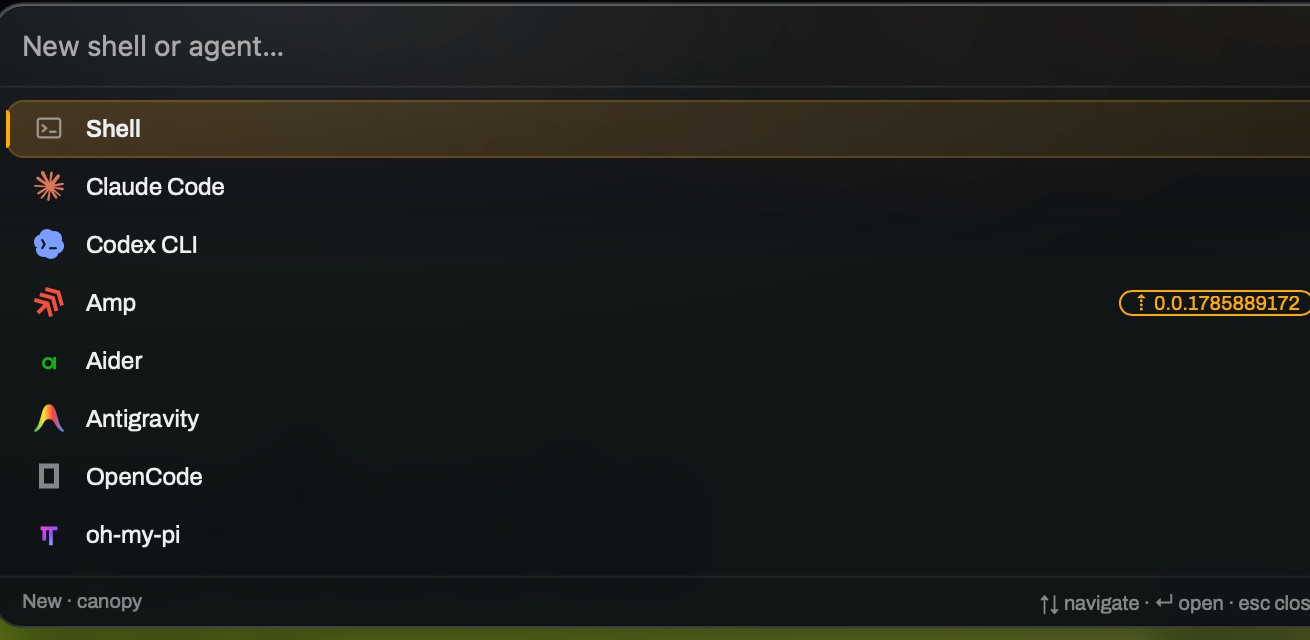
There is no useful universal number. One person can run many sessions that are waiting, but only a limited number of diffs can be understood, tested, and integrated at the same time. Start with the tasks and the review queue, then decide whether another agent creates parallel progress or another unfinished branch.
Count independent outcomes, not available tabs
Write down the deliverables before launching sessions. A documentation correction, a UI bug in one component, and a read-only dependency investigation may proceed independently. Two agents changing the same API contract cannot safely make separate final decisions without coordination. Git worktrees isolate files, but not shared databases, ports, architectural choices, or the final merge. The useful parallel count is bounded by tasks that can reach review separately.
Make review capacity visible
For each active code-changing agent, expect a branch or worktree, changed files, test evidence, a running result where relevant, and a human acceptance decision. If two agents finish during the same hour and you can thoroughly review only one, the second result waits. Launching a third does not make the queue shorter. Community discussion about simultaneous Claude Code sessions repeatedly names context switching and review bandwidth as the constraint; treat those reports as experience, not a measured ceiling for your team.
| Before starting another agent | Evidence to collect | Decision |
|---|---|---|
| Is its outcome independent? | Named result, owner, branch, and files or component | If it depends on another unfinished decision, wait or run research only |
| Can you review its result? | Current review queue and time needed for latest diffs | If accepted work is waiting, review before adding more implementation |
| Can it run safely? | Worktree, port, service, and account plan | Separate shared resources or run sequentially |
| Does the extra session help? | Accepted changes, elapsed time, retries, and usage | Compare with a smaller concurrent batch |
Use different roles when edits would collide
Parallel work does not require parallel writing. One agent can research a code path without editing while another implements a bounded change; a reviewer can inspect a completed diff after the implementer stops. Anthropic's agent-team documentation recommends research and review for parallel exploration and warns that teams add coordination and token overhead. In Canopy, the Agents rail and Agent Workspace are designed to show session state and changed files across supported CLIs, but the person directing the work still chooses ownership and integration.
Watch the whole cost of the batch
Record time to an accepted result, not only time until each agent first says done. Include human review, merge conflicts, reruns, and later fixes. If your CLIs expose usage, record provider or CLI estimates with timestamps; do not treat Canopy's displayed estimate as a provider invoice. A new session may increase total tokens even while shortening wall-clock time. Decide whether that trade helps the task you actually care about.
Try a measured two-batch experiment
Choose four similarly scoped, independent tasks with clear acceptance checks. Run one or two at a time for the first batch, then try a different concurrency level on another comparable batch. Keep the reviewer and quality bar constant. Log when each agent became blocked, finished its first draft, entered review, and was accepted or rejected. If review lag, integration failures, or rework climb, reduce code-changing concurrency and use spare capacity for read-only investigation. This is an evaluation method, not a claim that a particular number always wins.
Copyable resources
Parallel-agent review queue
One line per accepted task, including failed attempts and review time.
Task / acceptance checks: [ ]
Agent, CLI, model, and checkout: [ ]
Independent of these active tasks: [ ]
Started: [ ] | First draft: [ ] | Human review started: [ ] | Accepted/rejected: [ ]
Changed files and final diff: [ ]
Tests and running result: [ ]
Blocked decisions or shared service conflicts: [ ]
Review minutes and rework: [ ]
Usage source, estimate, and timestamp: [ ]
Would another simultaneous code-changing agent have helped? [evidence]
Frequently asked questions
Is there a best number of coding agents for one person?
No universal number. It depends on how independent the tasks are and how much review and integration the person can complete. Measure accepted outcomes and queue time in your own workflow.
Do separate worktrees remove the cost of coordination?
No. They isolate local files; branches can still conflict in behavior, services can share state, and someone must review and integrate the results.
Should a waiting reviewer count as an active agent?
Track running, blocked, awaiting review, and accepted separately. The review queue matters more than the number of open tabs.