
An agent can give a plausible answer without opening the skill you expected. Test three things separately: was the skill available, did the CLI invoke it, and did the work follow it? Use a disposable task with an outcome you can inspect.
Start with one skill and one harmless result
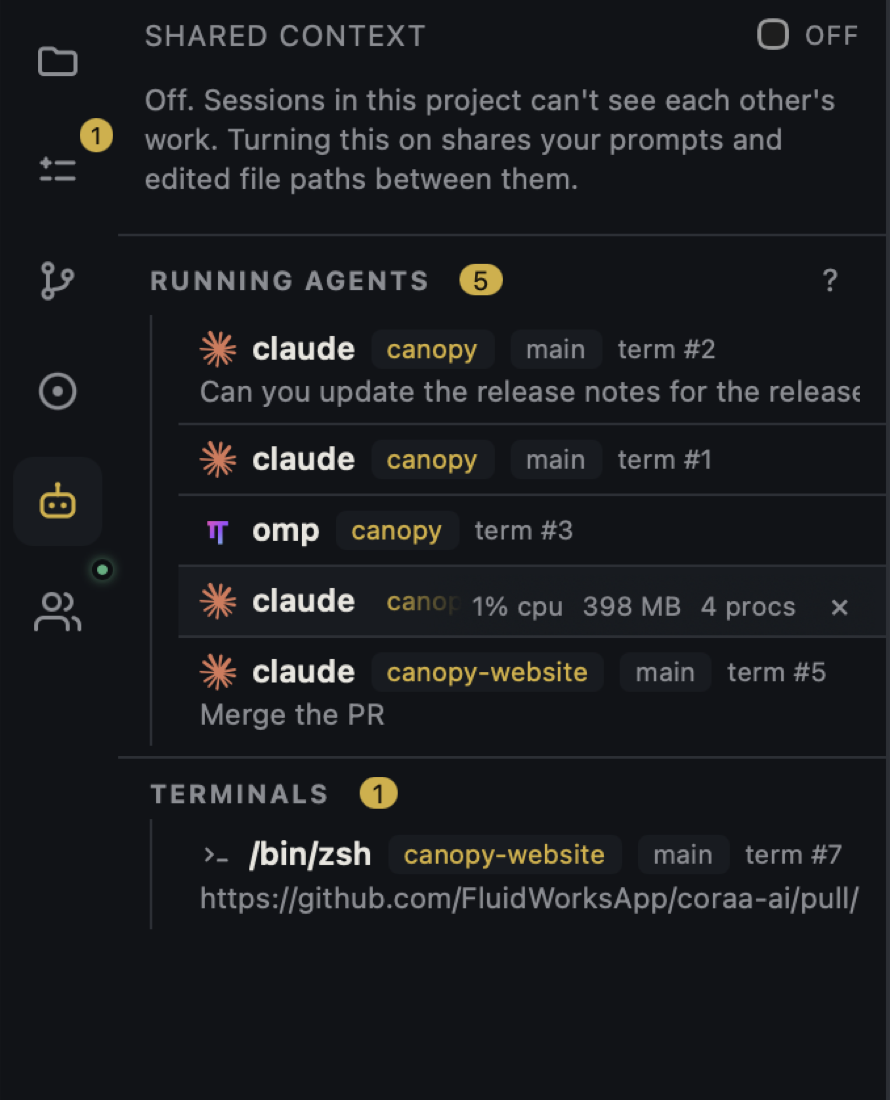
Pick a skill with a narrow trigger and visible output, such as a review note for a tiny sample diff. Read its SKILL.md and scripts first, and record its path, name, description, CLI, and expected output. Use a scratch repository or read-only request. In Canopy, open a fresh CLI session and note the CLI version, profile, directory, and checkout. The CLI, not Canopy, decides which skills it finds and runs.
Test discovery separately from invocation
Ask the CLI which skills are available, or open its skill menu, and confirm the name and description appear. Claude Code reads project skills from .claude/skills and personal skills from ~/.claude/skills, and suggests asking 'What skills are available?' when one won't trigger. Codex describes repo-scoped .codex/skills and user-scoped skills. A file in the repo that's missing from the list is a path, scope, or loading problem; rewording the prompt won't fix it. After moving or editing a skill, start a fresh session.
Invoke it explicitly and inspect the trace
Use the CLI's direct mechanism: /skill-name in Claude Code for a user-invocable skill, or /skills or a $skill-name reference in Codex. Ask for a small result, then check the visible invocation or run trace. Don't rely on the agent saying it used the skill. Check the output too: a review skill that requires file references and ranked findings should produce them for the sample diff. A skill can load and still be followed badly.
Try natural wording and a negative control
In two more fresh sessions, describe the task without naming the skill, then ask for an adjacent task that shouldn't trigger it. For a PR-review skill, 'review this small diff for user-visible regressions' is positive; 'tell me which branch I am on' is negative. Record whether it ran and whether the output passed. OpenAI's skill-evaluation guide recommends explicit, implicit, and negative cases, because one slash command doesn't test automatic selection. If the implicit case misses, sharpen the description; if the negative fires, narrow it.
Tie the result to the CLI you tested
Claude Code and Codex both use SKILL.md, but their paths, syntax, and controls differ, and Claude separates a description in context from the full body loading on invocation. A pass in one CLI or profile proves nothing about another. Save the three prompt and result pairs, CLI version, skill path, and observed invocation with the issue. Rerun after editing frontmatter or moving the skill.
Copyable resources
Use a disposable repository and record what the CLI visibly did, not what the agent claimed.
CLI, version, profile, and checkout: [ ]
Skill name, SKILL.md path, and description: [ ]
Expected safe output and required steps: [ ]
Discovery: listed in this fresh session? [yes/no + evidence]
Case 1 explicit prompt: [ ]; invocation seen: [ ]; output check: [ ]
Case 2 natural prompt: [ ]; invocation seen: [ ]; output check: [ ]
Case 3 adjacent prompt that should not trigger: [ ]; invocation seen: [ ]
Decision: fix location/scope, frontmatter, instructions, or expectation: [ ]
Frequently asked questions
Is seeing a skill name in a menu proof it ran?
No. It proves discovery in that session. Check the invocation or run trace and the output to see whether the skill was used and followed.
Why does a skill work by name but not automatically?
Direct invocation skips the selection decision. Test a natural request in a fresh session and sharpen the skill's name and description if it misses.
Will a Claude Code skill automatically load in Codex through Canopy?
No. Canopy hosts each CLI; check the skill's path, metadata, and invocation in each CLI separately.